Sovereign cloud infrastructure: Building for national security
Canada's national security infrastructure cannot run on servers it doesn't own. Here's what sovereign cloud actually means and what it demands of the systems built on top of it.

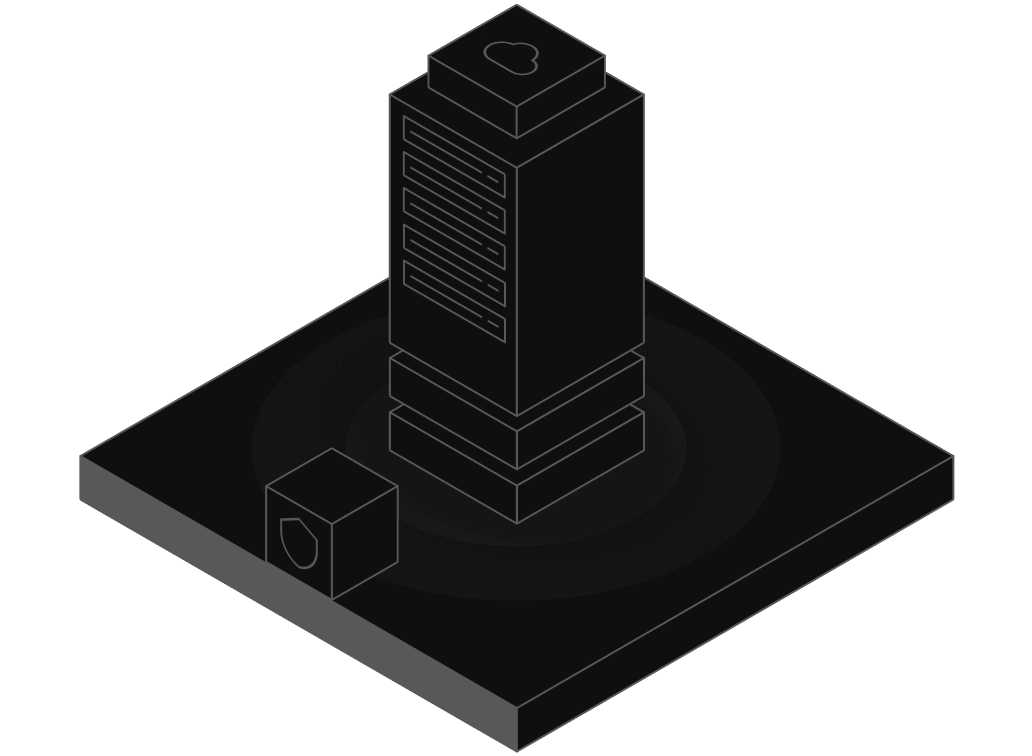
A roadmap to secure, sovereign infrastructure.
The word "cloud" has become so normalised in technology that its implications for national security are rarely examined. For most organisations, cloud means convenience — compute on demand, scalability, reduced infrastructure overhead. For a national defence organisation, cloud means something more consequential: it means deciding whose infrastructure your most sensitive data lives on, and whose jurisdiction that infrastructure falls under.
Canada's current defence technology posture depends significantly on cloud infrastructure operated by US-headquartered companies under US legal frameworks. The Foreign Intelligence Surveillance Act, the CLOUD Act, and a range of executive authorities give the US government access rights to data held by US companies — regardless of where that data physically resides. For Canadian defence intelligence, this is not an acceptable dependency.
Reduce dependency and protect data.
Sovereign cloud infrastructure for national security has four non-negotiable properties. It must be physically located in Canada. It must be operated by Canadian entities under Canadian legal frameworks. It must implement end-to-end encryption with key management that remains entirely within Canadian control. And it must be architecturally designed to operate without connectivity to foreign networks when required.
KANATA is built to all four properties. The platform runs on Canadian infrastructure. Its encryption keys never leave the platform. Its edge-native architecture means the full pipeline operates without any external network dependency — not as a fallback mode, but as the default operational state.
The four requirements above are not aspirational. They are the minimum standard for any defence intelligence platform operating in a contested information environment.

Quis faucibus massa sit egestas. Sit fermentum est ac pulvinar et sagittis sed sit ut. Quis faucibus aenean nibh vestibulum enim mi sit. Sollicitudin ultrices ultrices in ipsum urna fringilla massa leo. Sapien ultricies vitae rhoncus molestie purus. Urna urna dolor euismod porttitor et. Magna adipiscing dictum et adipiscing mollis feugiat. Est ac ultrices varius volutpat nibh purus placerat.
From policy to sovereign platforms.
The Government of Canada's Directive on Service and Digital and the Treasury Board's cloud adoption strategy both acknowledge the need for protected and classified cloud workloads on Canadian infrastructure. The policy framework exists. The implementation gap is in the technology specifically in the platforms that can actually operate at classification levels within Canadian infrastructure constraints.
KANATA closes that gap for the defence intelligence domain. It is not a commercial platform adapted for defence use. It is a platform designed from first principles for the requirements of Canadian sovereign defence infrastructure.
The distinction matters. Adaptation creates dependencies. Purpose-built design eliminates them.
“National security depends on digital sovereignty, infrastructure that keeps control, resilience, and accountability in your hands, even under pressure.”
Architecture for national readiness.
Sovereign infrastructure is not just about data residency. It is about operational continuity under adversarial conditions. A national security platform must remain operational when communications are degraded, when adversaries are actively attempting to disrupt or intercept, and when allied networks cannot be relied upon.
KANATA's edge-native architecture addresses each condition. Local processing eliminates the latency and dependency of cloud connectivity. MISTIG's encryption and anomaly detection capabilities protect the pipeline under active interception attempts. And the platform's modular design allows continued operation across degraded sensor networks — maintaining the best available picture even when individual feeds go dark.
Zero-trust and data residency basics.
Every component of the KANATA platform operates under a zero-trust security model. No component automatically trusts any other. Every request, INUKSHUK sending fused data to KITCHI, KITCHI sending a recommendation to the operator interface is authenticated independently. If any node is compromised, it cannot automatically pivot to compromise others.
Data residency is enforced at the architectural level, not the policy level. There is no configuration option that routes data through foreign infrastructure. The platform does not have that capability by design.
This is what sovereign cloud infrastructure looks like in practice not a policy document, but an architectural constraint that cannot be misconfigured away.