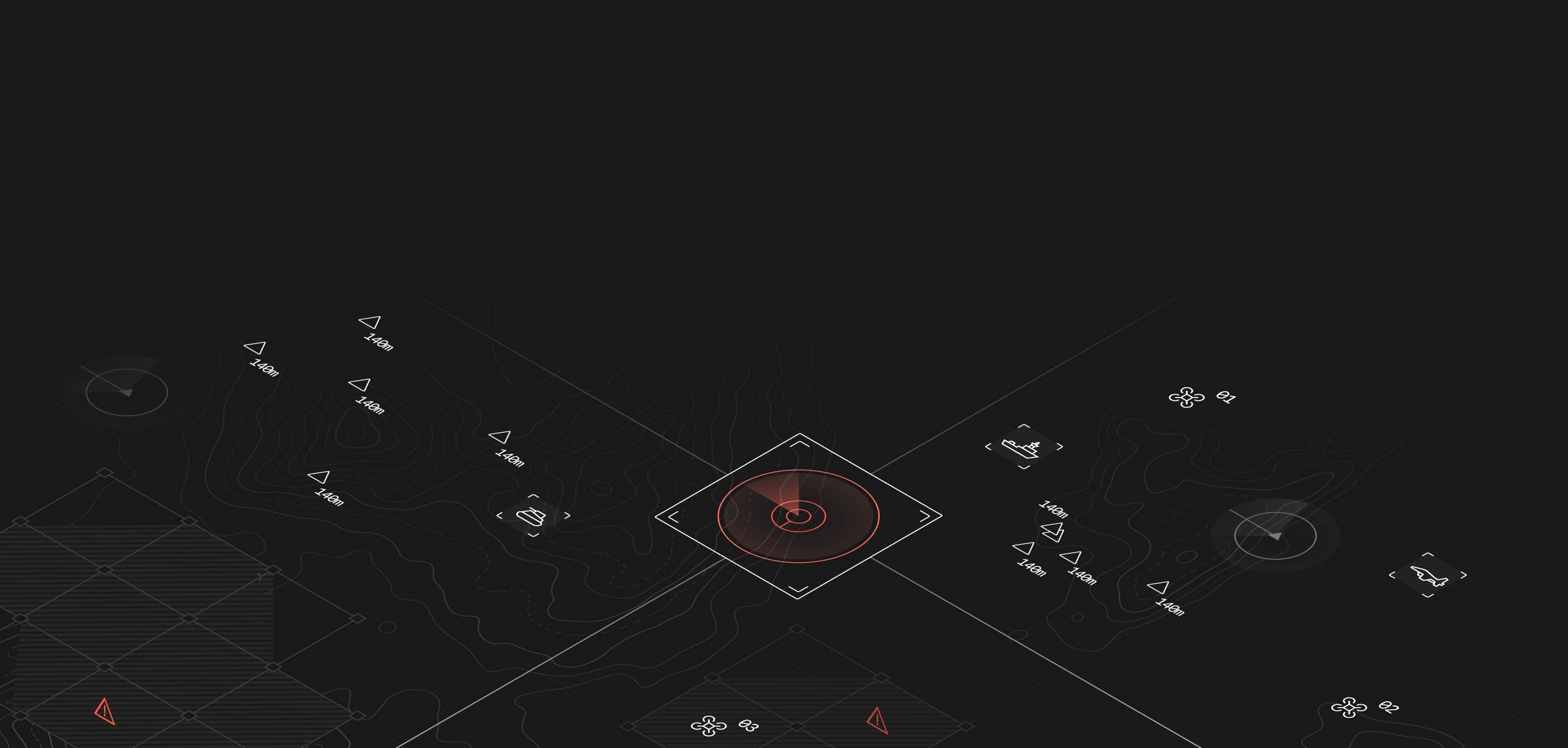
Every sensor. One sovereign picture.
Multi-modal fusion at the tactical edge. Every sensor feed. One sovereign picture. Decision-ready in seconds.
INUKSHUK
INGESTION
CORRELATION
FUSION
INFERENCE

Common operating picture
Explainable confidence
Edge deployable


Sensor-agnostic
The intelligence gap isn't data. It's fusion.
Canada's forces generate more sensor data than ever. The problem is that nobody can see it all at once.
Manual fusion burns hours
Arctic ISR data arrives from six different sensor types in six different formats. Today, an analyst manually cross-references each one. A single maritime surveillance picture takes 4–8 hours to assemble. By the time it's ready, it's stale.
Sensor silos create blind spots
Radar sees a contact. AIS shows nothing at that location. Satellite imagery is 12 hours old. Each system tells a partial truth. Without automated correlation, the gap between them is where threats hide.
No confidence scoring
When an analyst manually fuses data, the output is a best guess with no visible reasoning. The commander receiving the picture has no way to know how certain the assessment is or which source drove it. Every decision is made on invisible assumptions.

Allied dependency for fusion tools
The fusion platforms available to CAF today are built, hosted, and maintained by allied nations. Operational tempo, data sovereignty, and upgrade cycles are controlled by someone else's priorities, not Canada's.
Edge environments are ignored
Existing enterprise fusion systems require persistent high-bandwidth connectivity. Arctic patrols, forward operating bases, and maritime sovereignty operations cannot guarantee that. The places where fusion matters most are the places current tools don't work.

New sensors mean new integration projects
Every time a new sensor type comes online, the existing architecture requires a custom integration project. Six months, six figures. The sensor landscape moves faster than the integration pipeline can follow.
INUKSHUK closes every gap.
Each pain point above has a direct, engineered answer inside the platform.
INUKSHUK ingests, normalizes, and fuses multi-modal sensor data in seconds, not hours. The same maritime picture that takes an analyst a full shift is assembled continuously and updated as new data arrives. The analyst's job shifts from assembly to judgment.
When radar, AIS, and satellite see the same contact, INUKSHUK resolves them into one confirmed track automatically. When they conflict, the system flags the discrepancy and shows the operator exactly which sources agree and which don't. No blind spots, no silent assumptions.
Every fused output carries a visible confidence score with full provenance. The commander sees not just what INUKSHUK assessed, but which sensors contributed, how they were weighted, and where the uncertainty sits. No black boxes. No invisible assumptions.
INUKSHUK is Canadian-designed, Canadian-built, and deployed on Canadian infrastructure. No data leaves sovereign control. No operational dependency on allied networks. Upgrade cycles are set by CAF need, not by a foreign vendor's product roadmap.

The platform runs at the tactical edge within SWaP constraints, with no persistent cloud connectivity required. Arctic patrols, forward bases, and maritime operations get the same fusion capability as a headquarters with full bandwidth. Connectivity optional.
New sensor types are onboarded through a standardized ingestion API. No custom integration project. No six-month timeline. A new feed goes from raw data to fused picture in days, not quarters. The platform grows with the sensor landscape instead of falling behind it.

Let us help you help our sovereignty
INUKSHUK is deployed to your sensor environment, your feeds, your classification requirements, your operational tempo. No generic demo. We scope the engagement to what you're actually running, show you the fused picture on your own data, and let the output speak for itself.